Compressed Bio-Gas (CBG) Plants
A CBG plant is an industrial facility that converts organic waste and biomass into high-purity, renewable methane fuel that matches the quality of compressed natural gas (CNG). Vasundhara Re-Engineering is extending its clean-tech portfolio to CBG project development, alongside its waste-to-energy work across India and abroad.
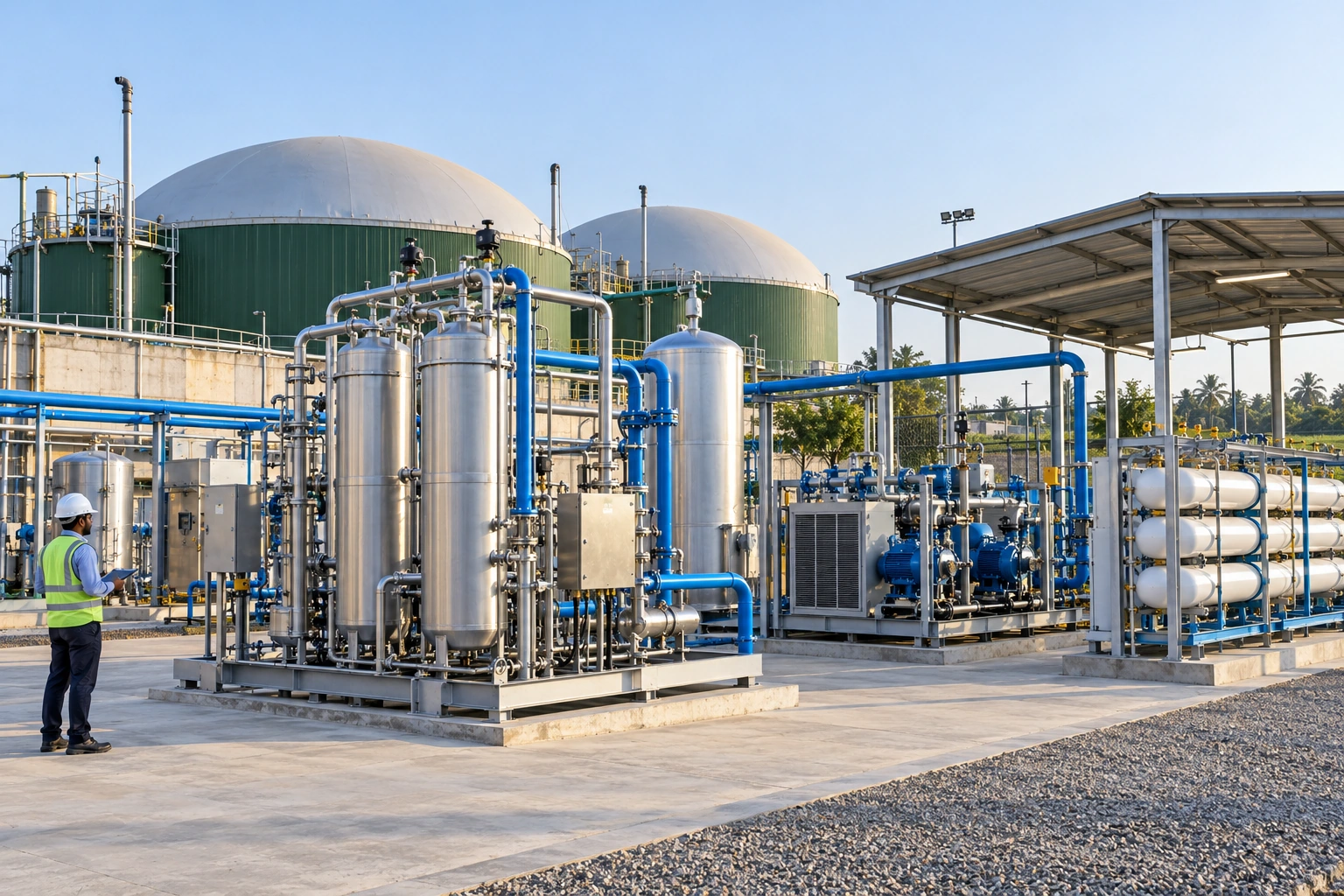
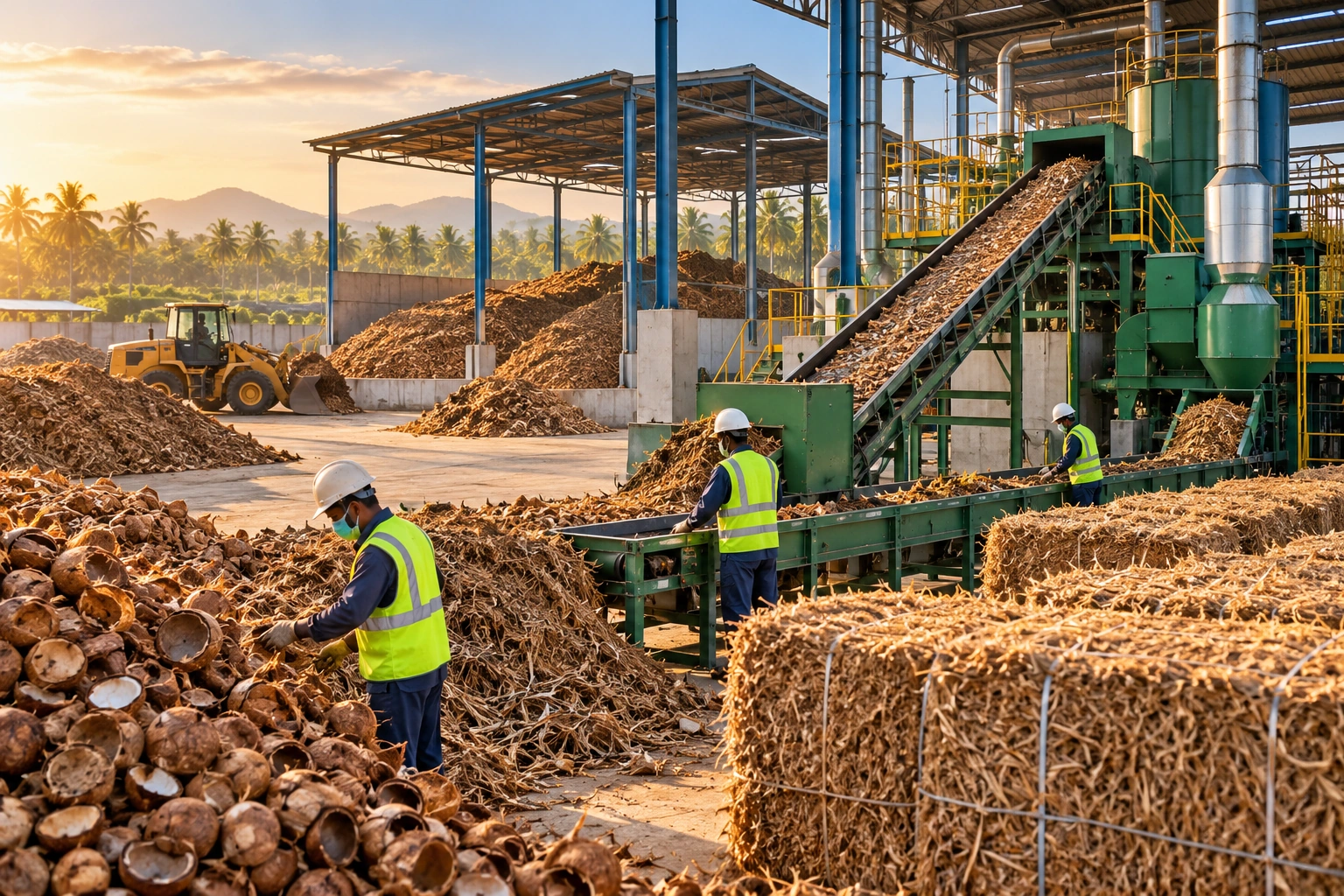
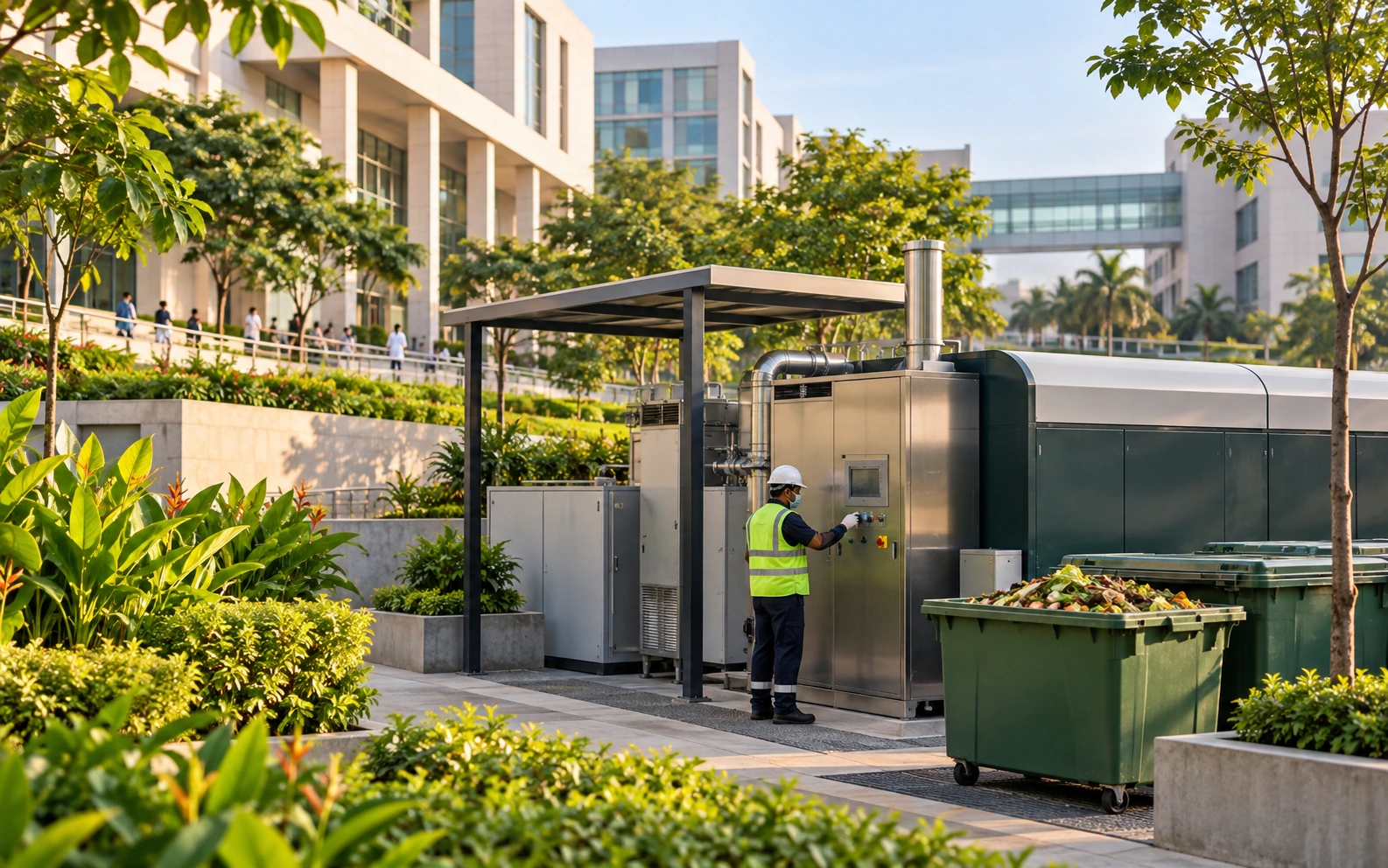
Organic feedstock such as food and market waste, agricultural residue, press mud and cattle dung is digested without oxygen to produce raw biogas. The gas is then purified, upgraded to over 90% methane and compressed, ready for use as vehicle fuel or industrial gas. The leftover digestate is processed into fermented organic manure.
- Converts organic waste into renewable fuel
- Fuel quality comparable to CNG for transport and industry
- Fermented organic manure as a useful by-product
- Suited to municipal organic waste, agri residue and food waste
- Cuts methane emissions from dumping and open burning
- Reduces dependence on imported natural gas
Organic waste that once polluted our cities can now fuel vehicles, kitchens and industry.
From Organic Waste to CBG
A CBG plant runs in three stages. First, feedstock is received, segregated and pre-treated. Second, anaerobic digestion converts it into raw biogas. Third, the biogas is purified, upgraded and compressed into CBG, while the digestate is turned into organic manure.
Step
01
Feedstock Assessment
Step
02
Anaerobic Digestion
Step
03
Upgrading & Compression
Who CBG Suits
CBG works best where a steady supply of organic feedstock is available within practical haulage distance of the plant.


- Municipal corporations
- Agro-processing and sugar industry
- Dairy and cattle clusters
- Food and market waste generators
- Bioenergy investors
- Fuel retailers and city gas distributors
Project suitability depends on feedstock quantity, quality and location. Write to our projects team for a preliminary assessment.
Frequently Asked Questions
What is a CBG plant?
A CBG plant converts organic waste and biomass into high-purity renewable methane through anaerobic digestion, followed by purification and compression.
How is CBG different from CNG?
CBG is renewable methane upgraded to a quality comparable to CNG, so it can serve the same vehicles and industrial uses. CNG is a fossil fuel, while CBG is made from organic waste.
What feedstock can a CBG plant use?
Food and market waste, agricultural residue, press mud, cattle dung and other organic matter. Suitability depends on the quantity, quality and consistency of supply.
Who can enquire about a CBG project?
Municipal bodies, agro-processing and dairy businesses, food waste generators and bioenergy investors can all enquire.
How do I get started?
Write to Projects@vasundharareengineering.com or message us on WhatsApp at +91 79 7288 0758 with your feedstock and location.